

Latest
Speech
22 September 2026
Discurso del Secretario General ante la Asamblea General
Learn more
Story
21 September 2026
“Ciudad Vieja of the Future”: UN and Municipality of Montevideo join forces to revitalize the historic neighbourhood
Learn more
Story
19 August 2026
Uruguay and the United Nations advance the implementation of the Cooperation Framework 2026–2030
Learn more
Latest
The Sustainable Development Goals in Uruguay
Overall, Uruguay is well-positioned to achieve its committed goals. Three voluntary national reports have already been prepared regarding the country's progress on the SDGs. From the United Nations perspective, we acknowledge and continuously support this endeavor.
However, we have a decade left to accomplish all the outlined goals. Time is of the essence; hence, we must double our efforts to achieve them. The sustainable development of the country, and more specifically that of all Uruguayans, for whom we are dedicated, depends on achieving these objectives.
Take Action
02 January 2026
Actúa ahora por un futuro común
Adoptar lo posible. Ese es el lema de los 17 Objetivos de Desarrollo Sostenible, un plan para un mundo mejor. No debemos quedarnos a la espera del futuro que queremos: podemos crearlo en este mismo momento. Todo el mundo puede sumarse a este movimiento mundial por el cambio.
1 of 5

Story
17 June 2026
Serving as a soldier without losing one’s humanity: the story of UN peacekeeper Matías Reyes
When the camera turns on, in the afternoon in Goma (Democratic Republic of the Congo) and the morning in Montevideo (Uruguay), the composed face of Sergeant Matías Reyes fills the screen. Behind him stands a United Nations flag, and to his right, the flag of Uruguay, his homeland and country of residence. Matías Reyes is serving on his third peacekeeping mission in the Congo. A member of the 14th Parachute Infantry Battalion and the Special Operations Forces of the Uruguayan National Army, Reyes has built an 11-year career in the military.At 32 years old, Reyes gained worldwide recognition for an act of courage and service worthy of a movie script. In 2025, the crisis in Goma, the capital of North Kivu Province in the Democratic Republic of the Congo, escalated dramatically as the M23 rebel group took control of the city. The offensive killed thousands of people and displaced hundreds of thousands more, plunging the region into a severe humanitarian crisis. Goma is home to the headquarters of the United Nations Organization Stabilization Mission in the Democratic Republic of the Congo (MONUSCO), where peacekeepers from several nations work to support peace and stability in the country.In January 2025, after weeks of conflict and armed clashes, a large group of Congolese Army soldiers became surrounded and suffered serious injuries. Reyes, deployed at the MONUSCO base, did not hesitate. Amid intense fighting, he assisted and evacuated wounded soldiers seeking refuge at the United Nations compound. Despite constant gunfire and extreme danger, he rescued 12 critically injured personnel, playing a decisive role in saving their lives.His actions earned him the highest decoration within the United Nations peacekeeping system: the Captain Mbaye Diagne Medal for Exceptional Courage. The award was presented by the Secretary-General on 5 June in New York. Reyes was unable to attend the ceremony in person due to the Ebola outbreak in the Congo, which limited travel opportunities.The distinction was established in 2014 to recognize military, police, and civilian personnel who demonstrate exceptional courage in the performance of their duties. The medal is named after Captain Mbaye Diagne of Senegal, who sacrificed his life in Rwanda in 1994 while saving countless others. It is awarded exclusively to individuals who display extraordinary bravery in the field. Since its creation, the medal had previously been awarded only three times.We interviewed Reyes to help shed light on what it means to be a Uruguayan peacekeeper serving for peace. Below is an excerpt from his conversation with UN Uruguay:When you are under constant fire, facing that level of danger, how do you make the decision to move forward, to assist, to evacuate? In those moments, what carries more weight: training or instinct?In critical situations, there is no room for prolonged reflection. Decisions are based primarily on the training we have received, which enables us to act immediately, in an organized and effective manner. Instinct plays a role, but it is shaped by that training and by experience. In those few seconds, what prevails is the mission itself, carried out with control, discipline, and coordination alongside our fellow soldiers.This took place shortly after the tragic incident that claimed the life of soldier Rodolfo Álvarez...Yes, and the news had a devastating impact, especially on those who were directly involved. It was a reminder of the ultimate sacrifice we are prepared to make, both for the mission and for our comrades. That is when the courage of every soldier had to be renewed: facing that tragedy and still preparing for what lay ahead, which were more days of conflict.At the time, I was not able to fully grasp the significance of rescuing those 12 critically wounded soldiers. Every second mattered, and the priority was evacuation. As I mentioned, we assessed the situation, but beyond the risk and everything else, we did not stop to think about it. The priority was to evacuate those individuals and get them to safety.It was only days later that others helped me understand the significance of what had happened and of what I had done, and I came to accept it as such. I also believe there is a strong sense of duty that is very much part of being Uruguayan, wouldn't you say?"To my fellow peacekeepers, I would say: never forget those who came before us, and continue to honor their example through professionalism, unwavering discipline, and above all, humility and commitment."What does it mean to you to be only the fourth person in the world to receive this medal?Above all, it is a profound honor, but also a great responsibility. It is a recognition that goes beyond the individual and represents the commitment, dedication, and values of an entire unit.I accept it with humility, fully aware of its significance and of the legacy of those who received it before me. More than a personal achievement, I see it as an ongoing commitment to continue acting with professionalism, discipline, and a vocation for service.Uruguay has a long and respected tradition in Peace Operations and is one of the countries that contributes a significant number of peacekeepers to missions around the world. What do you think a Uruguayan peacekeeper brings to the field? How would you describe the Uruguayan peacekeeper?Above all, we bring a high level of commitment, professionalism, and dedication to service.We are characterized by strong training, operational discipline, and a remarkable ability to adapt to complex environments. We are also recognized for values such as humility, respect, empathy, and closeness to local communities, which help build trust and foster dialogue.There is also a deep commitment to protecting lives. As I mentioned before, we always strive to care for and protect the civilian population. We work side by side with contingents from other nations, all serving the same purpose: helping this country achieve peace one day."This medal is a clear example of the highest values represented in peacekeeping service: courage, unity, respect for life, and commitment to the lives of others. Receiving a distinction associated with such a profound honor requires me to carry it with great humility and respect above all else."Peacekeeping missions often take place far from home. You are currently thousands of kilometers away from Uruguay. What have you learned about peace while living in a context of war?I have learned that peace is not something abstract. Peace is built through concrete actions, often in the most difficult circumstances.Especially in a war context, you witness fear, suffering, and the vulnerability of people. But you also see the hope that can be conveyed through every gesture and every decision, because each action we take can make a difference in someone's life.Serving in a peacekeeping mission means being present when people need you the most.I learned that building peace requires more than words or good intentions. It requires trust, teamwork, and empathy. Most importantly, it requires the actions that turn those aspirations into reality.How does a person, and a family, prepare to serve in such a demanding environment as the Democratic Republic of the Congo? What part of the sacrifice is invisible to those on the outside, during those nights and days when, beyond the training, there must surely be moments of struggle and homesickness?A soldier's moral strength is built on the essential support of their family. That support is key to coping with the demands of the mission and the distance from loved ones.Our preparation is comprehensive: technical, tactical, physical, and, above all, mental. That last aspect is often the most decisive in operational performance.It is also important to recognize the sacrifices involved in a mission like this, not only the separation from family, but also the constant exposure to the suffering of others and the ever-present risk. These are realities that are often difficult to fully understand outside the military environment. It is what makes missions like this possible. Many people do not see the sacrifice involved in being far from one’s country and family. In my case, I am a father, and I have my son, Benjamín. These are very demanding circumstances. That is why family support is the foundation of every soldier’s morale. At least in my case, that is certainly true, and I am deeply grateful for the unconditional support I receive from my family.What did Benjamín say when he learned that you had received this medal?He was very happy. He is 11 years old, and he sees it in a very beautiful way. I am sure he is proud of his father. Well, he sees me as a hero, doesn't he? (smiles)Without a doubt, he is proud, and that is what gives me the strength to keep moving forward and continue contributing until the day I leave here. It is what inspires me every single day.For me, hearing something like that from a son is very special and difficult to describe. Beyond the medal itself, what I value most is being able to pass on, by example, a sense of duty, commitment, and the importance of helping others."As Uruguayan peacekeepers, we are distinguished by values such as humility, respect, empathy, and closeness to the local population."What message would you like to convey to families and to your fellow soldiers regarding this distinction and the comrades who have fallen?First and foremost, I would like to express my deepest gratitude to the families whose quiet and unconditional support is essential for us to fulfill our mission. They are the ones who sustain the soldier from afar and who often share, in silence, the sacrifices that come with serving far from home.To my comrades, I would say that this recognition does not belong to me alone. It is a reflection of the dedication and commitment of all of us. It is a call to continue honoring, through professionalism, discipline, and humility, the legacy of those who gave their lives in the line of duty.To our fallen comrades, I offer my deepest respect. Their example must guide us at all times and remind us of the true purpose of our mission: to serve and to protect.
And after this experience and this distinction, what would you say to a young Uruguayan man or woman who is considering serving as a peacekeeper?I would tell them that it is a great responsibility, but also a great honor. It is not an easy task, because it requires sacrifice, discipline, and preparation. But it also provides the opportunity to help those who need it most. Being able to serve humanity is a source of immense personal fulfillment.I would tell them that the true value of the mission lies in serving, protecting, and acting with humility and commitment at all times.. "I learned that peace is not something abstract. Peace is built through concrete actions, often in very difficult moments. (...) I learned that building peace requires more than words or good intentions; it requires trust, teamwork, and empathy."If you had to define in one sentence what it means to be a peacekeeper after everything you have experienced, what would that sentence be?(Pauses to reflect)To serve as a soldier without ever losing one's humanity.
A final message?I would like to begin by addressing all my comrades, especially those serving in peacekeeping missions across different regions of the world, helping communities and protecting lives. But above all, I would like to say to Uruguayan peacekeepers: never forget the true purpose of your mission and what it represents for us. Never, ever give up, and always keep our fallen comrades in your thoughts.To my family, I want to express my deepest gratitude for their unconditional support. They are always there for me, especially my son, my father, my mother, and my partner.And finally, I would say that the Uruguayan soldier will always be committed to causes such as these: serving and protecting wherever they may be called to do so. It is rooted in our sense of humanity and in the humility and respect that are instilled in us through the military institution of our country."The soldier’s moral strength is rooted in the essential support of their family. That support is crucial in facing the demands of the mission and the distance from loved ones."
And after this experience and this distinction, what would you say to a young Uruguayan man or woman who is considering serving as a peacekeeper?I would tell them that it is a great responsibility, but also a great honor. It is not an easy task, because it requires sacrifice, discipline, and preparation. But it also provides the opportunity to help those who need it most. Being able to serve humanity is a source of immense personal fulfillment.I would tell them that the true value of the mission lies in serving, protecting, and acting with humility and commitment at all times.. "I learned that peace is not something abstract. Peace is built through concrete actions, often in very difficult moments. (...) I learned that building peace requires more than words or good intentions; it requires trust, teamwork, and empathy."If you had to define in one sentence what it means to be a peacekeeper after everything you have experienced, what would that sentence be?(Pauses to reflect)To serve as a soldier without ever losing one's humanity.
A final message?I would like to begin by addressing all my comrades, especially those serving in peacekeeping missions across different regions of the world, helping communities and protecting lives. But above all, I would like to say to Uruguayan peacekeepers: never forget the true purpose of your mission and what it represents for us. Never, ever give up, and always keep our fallen comrades in your thoughts.To my family, I want to express my deepest gratitude for their unconditional support. They are always there for me, especially my son, my father, my mother, and my partner.And finally, I would say that the Uruguayan soldier will always be committed to causes such as these: serving and protecting wherever they may be called to do so. It is rooted in our sense of humanity and in the humility and respect that are instilled in us through the military institution of our country."The soldier’s moral strength is rooted in the essential support of their family. That support is crucial in facing the demands of the mission and the distance from loved ones."
1 of 5

Press Release
12 August 2026
UNOPS brindará asistencia a la Intendencia de Durazno para fortalecer su infraestructura vial
MONTEVIDEO, 07 de agosto de 2026.— La Intendencia Departamental de Durazno (IDD) y la Oficina de Naciones Unidas de Servicios para Proyectos (UNOPS) firmaron un acuerdo para fortalecer las capacidades del gobierno departamental en procesos de adquisiciones y obras de infraestructura vial que permitan mejorar la conectividad estratégica de la zona, consolidando una movilidad más eficiente y segura entre zonas urbanas y rurales de Durazno.
Con una duración de dos años y una inversión pública de USD 4.7 millones, la iniciativa apoyará la modernización de la maquinaria vial, además de acompañar la gestión de proyectos viales claves como el mejoramiento de la caminería departamental, puentes y calzadas para optimizar la circulación y el transporte.A través de esta alianza, UNOPS brindará asistencia técnica a la Intendencia en una diversidad de actividades como: asistencia en la gestión de obras, capacitaciones para el personal, apoyo en la planificación e implementación de adquisiciones, revisión de diseños y pliegos, entre otras. Además, se trabajará desde un enfoque de género, sostenibilidad ambiental y seguridad en todos los procesos para brindar soluciones viales de calidad a largo plazo.Este proyecto conjunto no sólo busca fortalecer nodos claves en la infraestructura vial de Durazno, sino que también permitirá unir esfuerzos para desarrollar comunidades cada vez más conectadas, sostenibles y seguras en Uruguay. Datos de contacto:Julia Ruttimann | Asistente Sénior de Comunicaciones, Oficina de UNOPS en Argentina juliaru@unops.org Acerca de UNOPSUNOPS ofrece soluciones prácticas para operaciones humanitarias, de paz, seguridad y desarrollo. Ayudamos a los Gobiernos, las Naciones Unidas y otros asociados a gestionar proyectos, construir infraestructura sostenible y realizar adquisiciones sostenibles en Uruguay y en todo el mundo.Para saber más, consulte https://www.unops.org/es/uruguay
Con una duración de dos años y una inversión pública de USD 4.7 millones, la iniciativa apoyará la modernización de la maquinaria vial, además de acompañar la gestión de proyectos viales claves como el mejoramiento de la caminería departamental, puentes y calzadas para optimizar la circulación y el transporte.A través de esta alianza, UNOPS brindará asistencia técnica a la Intendencia en una diversidad de actividades como: asistencia en la gestión de obras, capacitaciones para el personal, apoyo en la planificación e implementación de adquisiciones, revisión de diseños y pliegos, entre otras. Además, se trabajará desde un enfoque de género, sostenibilidad ambiental y seguridad en todos los procesos para brindar soluciones viales de calidad a largo plazo.Este proyecto conjunto no sólo busca fortalecer nodos claves en la infraestructura vial de Durazno, sino que también permitirá unir esfuerzos para desarrollar comunidades cada vez más conectadas, sostenibles y seguras en Uruguay. Datos de contacto:Julia Ruttimann | Asistente Sénior de Comunicaciones, Oficina de UNOPS en Argentina juliaru@unops.org Acerca de UNOPSUNOPS ofrece soluciones prácticas para operaciones humanitarias, de paz, seguridad y desarrollo. Ayudamos a los Gobiernos, las Naciones Unidas y otros asociados a gestionar proyectos, construir infraestructura sostenible y realizar adquisiciones sostenibles en Uruguay y en todo el mundo.Para saber más, consulte https://www.unops.org/es/uruguay
1 of 5
Publication
15 December 2025
Marco de Cooperación de las Naciones Unidas para el Desarrollo Sostenible en Uruguay 2026-2030
El Gobierno de Uruguay, a través de la Agencia Uruguaya de Cooperación Internacional (AUCI) y el Sistema de Naciones Unidas en Uruguay firmaron el nuevo Marco de Cooperación de las Naciones Unidas para el Desarrollo Sostenible 2026 – 2030, acuerdo estratégico que guiará la cooperación internacional en el país durante los próximos 5 años. Este instrumento establece las prioridades y resultados conjuntos que busca alcanzar el gobierno mediante la colaboración entre las agencias, fondos y programas de la ONU en Uruguay, en línea con los Objetivos de Desarrollo (ODS) y la Agenda 2030. Los ejes estratégicos del acuerdo son: cohesión social, convivencia y bienestar integral; crecimiento sostenible e inclusivo basado en ciencia, tecnología e innovación; fortalecimiento de la gobernanza democrática, descentralización y participación ciudadana; y multilateralismo, integración regional y cooperación internacional.
1 of 5

Video
25 March 2026
Bienvenidos a Casa ONU en Uruguay
Inaugurada el 9 de septiembre de 2022, la Casa ONU Uruguay se ubica en la calle 25 de Mayo, esquina Ciudadela, a pocos metros de Presidencia y de diversos ministerios y oficinas de gobierno. Esta sede es un ejemplo vivo de la reforma que Naciones Unidas impulsa en todo el mundo: visualizar a la organización como una sola entidad, más eficiente, más eficaz y con menor costo operativo.
1 of 5

Story
21 September 2026
“Ciudad Vieja of the Future”: UN and Municipality of Montevideo join forces to revitalize the historic neighbourhood
The United Nations system in Uruguay and the Municipality of Montevideo took a first step towards developing a joint agenda to support the review of the Special Plan for Ciudad Vieja, guided by a shared vision of a “Ciudad Vieja of the Future”.
The initiative began with an inter-agency workshop held at UN House, located in the heart of the historic neighbourhood, bringing together officials from the Municipality of Montevideo and Municipio B alongside representatives of ten United Nations agencies, funds and programmes.The event was attended by the Secretary-General of the Municipality of Montevideo, Viviana Repetto, and the Mayor of Municipio B, Patricia Soria, who highlighted the importance of strengthening coordination among the departmental government, citizens, the private sector, civil society organizations and international cooperation partners to advance a renewed vision for Ciudad Vieja.
In his opening remarks, the United Nations Resident Coordinator in Uruguay, Pablo Ruiz Hiebra, emphasized the United Nations system’s willingness to support the process as a strategic partner, making technical capacities and specialized expertise available to contribute to the neighbourhood’s sustainable development. He also recalled that UN House is part of Ciudad Vieja, reinforcing the organization’s commitment to the future of this area.The meeting identified opportunities for collaboration in key areas of urban transformation, including heritage and culture, housing, social inclusion, migration, employment, gender equality and care, climate action, urban governance, financing for development and sustainable infrastructure.Drawing on their respective mandates, agencies such as UNDP, UNEP, UNESCO, ECLAC, IOM, UNHCR, ILO, UN Women, UN-Habitat and UNOPS shared experiences, tools and potential areas of support to strengthen the process led by the Municipality. These included support for integrated urban planning, the regeneration of public spaces, the preservation and enhancement of cultural heritage, the promotion of the creative economy, the integration of migrants and refugees, the promotion of employment and vocational training, the incorporation of gender and care perspectives, and the strengthening of climate and environmental resilience. Durante el intercaThe discussions also highlighted priority challenges for the future of Ciudad Vieja, including strengthening its resident population, rehabilitating buildings and urban spaces, protecting its heritage identity, promoting sustainable economic activities and developing innovative financing mechanisms for urban regeneration.Natalia Brener, Territorial Planning Manager at the Municipality, presented the main directions of the review process for the Special Plan for Ciudad Vieja. She highlighted the milestones achieved under the current plan, adopted in 2003, the participatory nature of the review process and lessons learned from other cities in the region. She also identified four objectives for the new plan: urban centrality, the resident population, environmental challenges and cultural heritage.Looking ahead, the Municipality of Montevideo and the United Nations system aim to further strengthen their joint efforts, both in reviewing the Special Plan and in identifying and implementing concrete, innovative and scalable actions. They also committed to maintaining a coordination forum to mobilize knowledge, partnerships and resources to advance towards a more inclusive, sustainable and resilient Ciudad Vieja.The initiative seeks to make Ciudad Vieja a model of integrated urban development that preserves its memory and identity while creating new opportunities for those who live in, work in and enjoy one of Montevideo’s most emblematic neighbourhoods.
The initiative began with an inter-agency workshop held at UN House, located in the heart of the historic neighbourhood, bringing together officials from the Municipality of Montevideo and Municipio B alongside representatives of ten United Nations agencies, funds and programmes.The event was attended by the Secretary-General of the Municipality of Montevideo, Viviana Repetto, and the Mayor of Municipio B, Patricia Soria, who highlighted the importance of strengthening coordination among the departmental government, citizens, the private sector, civil society organizations and international cooperation partners to advance a renewed vision for Ciudad Vieja.
In his opening remarks, the United Nations Resident Coordinator in Uruguay, Pablo Ruiz Hiebra, emphasized the United Nations system’s willingness to support the process as a strategic partner, making technical capacities and specialized expertise available to contribute to the neighbourhood’s sustainable development. He also recalled that UN House is part of Ciudad Vieja, reinforcing the organization’s commitment to the future of this area.The meeting identified opportunities for collaboration in key areas of urban transformation, including heritage and culture, housing, social inclusion, migration, employment, gender equality and care, climate action, urban governance, financing for development and sustainable infrastructure.Drawing on their respective mandates, agencies such as UNDP, UNEP, UNESCO, ECLAC, IOM, UNHCR, ILO, UN Women, UN-Habitat and UNOPS shared experiences, tools and potential areas of support to strengthen the process led by the Municipality. These included support for integrated urban planning, the regeneration of public spaces, the preservation and enhancement of cultural heritage, the promotion of the creative economy, the integration of migrants and refugees, the promotion of employment and vocational training, the incorporation of gender and care perspectives, and the strengthening of climate and environmental resilience. Durante el intercaThe discussions also highlighted priority challenges for the future of Ciudad Vieja, including strengthening its resident population, rehabilitating buildings and urban spaces, protecting its heritage identity, promoting sustainable economic activities and developing innovative financing mechanisms for urban regeneration.Natalia Brener, Territorial Planning Manager at the Municipality, presented the main directions of the review process for the Special Plan for Ciudad Vieja. She highlighted the milestones achieved under the current plan, adopted in 2003, the participatory nature of the review process and lessons learned from other cities in the region. She also identified four objectives for the new plan: urban centrality, the resident population, environmental challenges and cultural heritage.Looking ahead, the Municipality of Montevideo and the United Nations system aim to further strengthen their joint efforts, both in reviewing the Special Plan and in identifying and implementing concrete, innovative and scalable actions. They also committed to maintaining a coordination forum to mobilize knowledge, partnerships and resources to advance towards a more inclusive, sustainable and resilient Ciudad Vieja.The initiative seeks to make Ciudad Vieja a model of integrated urban development that preserves its memory and identity while creating new opportunities for those who live in, work in and enjoy one of Montevideo’s most emblematic neighbourhoods.
1 of 5

Story
19 August 2026
Uruguay and the United Nations advance the implementation of the Cooperation Framework 2026–2030
The Government of Uruguay and the United Nations system held the first meeting of the Joint Steering Committee for the Sustainable Development Cooperation Framework 2026–2030, providing an opportunity to assess progress made since the agreement was signed and strengthen the mechanisms that will guide its implementation in the coming years.The meeting was co-chaired by the Secretary of the Presidency of the Republic, Alejandro Sánchez, and the United Nations Resident Coordinator in Uruguay, Pablo Ruiz Hiebra, with the participation of national authorities, representatives of United Nations agencies, funds and programmes, and technical teams responsible for monitoring the Framework.
The meeting reviewed progress in the programmatic architecture of the Cooperation Framework, resource estimates for its implementation, and the coordination and management mechanisms that will translate commitments into concrete actions. It also addressed the composition and functioning of the Civil Society Advisory Group, designed as a forum to strengthen the participation of diverse stakeholders in monitoring the country’s development priorities.The discussions also focused on identifying opportunities for support in strategic areas for Uruguay, including poverty reduction and stronger social protection, prospects associated with the agreement between Mercosur and the European Union, financing for development, innovation, and national capacities for peace and mediation.
The meeting marked an important step in implementing the Sustainable Development Cooperation Framework 2026–2030, signed on 15 December 2025 by the Government of Uruguay and the United Nations system. This instrument provides the roadmap guiding the cooperation of UN agencies, funds and programmes in the country, aligning their contributions with national priorities and the Sustainable Development Goals (SDGs).Reflecting on the partnership between Uruguay and the United Nations, the Secretary of the Presidency, Alejandro Sánchez, highlighted the long-standing cooperation built over the years and the importance of support from the system’s various agencies in addressing complex challenges related to sustainable development, democracy, climate change and inequalities. He also reaffirmed the commitment to promoting the active participation of civil society in implementing the Framework.For his part, Pablo Ruiz Hiebra underscored Uruguay’s historic commitment to multilateralism and human rights, highlighting the Cooperation Framework as a strategic partnership aligned with national priorities in areas such as child poverty and care, security and peaceful coexistence, sustainable economic growth, and the development of science, technology and innovation.The Cooperation Framework 2026–2030 is structured around four strategic pillars: social cohesion, peaceful coexistence and comprehensive well-being; sustainable and inclusive growth based on science, technology and innovation; stronger democratic governance, decentralization and citizen participation; and the promotion of multilateralism, regional integration and international cooperation.
These pillars seek to advance integrated responses to the country’s development challenges through evidence-based policies, public sector innovation, broad partnerships and sustainable financing, with particular attention to people and groups in the most vulnerable situations.The first meeting of the Joint Steering Committee reaffirmed the shared commitment of the Government of Uruguay and the United Nations system to achieving concrete results that contribute to the country’s sustainable development, in line with the 2030 Agenda and the principle of leaving no one behind.
The meeting reviewed progress in the programmatic architecture of the Cooperation Framework, resource estimates for its implementation, and the coordination and management mechanisms that will translate commitments into concrete actions. It also addressed the composition and functioning of the Civil Society Advisory Group, designed as a forum to strengthen the participation of diverse stakeholders in monitoring the country’s development priorities.The discussions also focused on identifying opportunities for support in strategic areas for Uruguay, including poverty reduction and stronger social protection, prospects associated with the agreement between Mercosur and the European Union, financing for development, innovation, and national capacities for peace and mediation.
The meeting marked an important step in implementing the Sustainable Development Cooperation Framework 2026–2030, signed on 15 December 2025 by the Government of Uruguay and the United Nations system. This instrument provides the roadmap guiding the cooperation of UN agencies, funds and programmes in the country, aligning their contributions with national priorities and the Sustainable Development Goals (SDGs).Reflecting on the partnership between Uruguay and the United Nations, the Secretary of the Presidency, Alejandro Sánchez, highlighted the long-standing cooperation built over the years and the importance of support from the system’s various agencies in addressing complex challenges related to sustainable development, democracy, climate change and inequalities. He also reaffirmed the commitment to promoting the active participation of civil society in implementing the Framework.For his part, Pablo Ruiz Hiebra underscored Uruguay’s historic commitment to multilateralism and human rights, highlighting the Cooperation Framework as a strategic partnership aligned with national priorities in areas such as child poverty and care, security and peaceful coexistence, sustainable economic growth, and the development of science, technology and innovation.The Cooperation Framework 2026–2030 is structured around four strategic pillars: social cohesion, peaceful coexistence and comprehensive well-being; sustainable and inclusive growth based on science, technology and innovation; stronger democratic governance, decentralization and citizen participation; and the promotion of multilateralism, regional integration and international cooperation.
These pillars seek to advance integrated responses to the country’s development challenges through evidence-based policies, public sector innovation, broad partnerships and sustainable financing, with particular attention to people and groups in the most vulnerable situations.The first meeting of the Joint Steering Committee reaffirmed the shared commitment of the Government of Uruguay and the United Nations system to achieving concrete results that contribute to the country’s sustainable development, in line with the 2030 Agenda and the principle of leaving no one behind.
1 of 5

Story
24 November 2025
Model UN ANEP 2025: learning diplomacy by doing it
On November 15 and 16, we held the Model United Nations ANEP 2025 at the Montevideo City Hall. More than 400 secondary-education students from across the country came together to faithfully and enthusiastically recreate the workings of the UN’s principal bodies. For us at United Nations Uruguay, in partnership with the National Administration of Public Education (ANEP), it was far more than an event: it was a living scene of multilateralism in action and a key milestone in the series of activities we are carrying out to mark the 80th anniversary of the United Nations The Model didn’t begin on opening day—it began months earlier, when participants and their teacher supervisors were called and selected. There were 16 students per department: eight from the General Directorate of Secondary Education and eight from the General Directorate of Technical and Vocational Education (UTU). Delegations from the Military High School and the Naval School also took part. In this way, the Model took on an unprecedented form, both for the number of participants and for its comprehensive territorial reach.
Once selected, the United Nations led the training. Over months of meetings, workshops, materials, and virtual sessions, we prepared delegations and chairs for something that leaves no room for improvisation: debating respectfully, negotiating on evidence, and building agreements that can withstand scrutiny and be put on paper. That groundwork was evident in every room—in the confidence with which delegates asked for the floor, the clarity of their speeches, the discipline in keeping to time, and the composure with which disagreements were handled. Four bodies shaped the experience: the General Assembly and the Human Rights Council structured their work through general and particular debates, allowing motions and points of information to channel the conversation. The Security Council operated without motions, demanding fine-tuned negotiation, an understanding of the veto, and a focus on operational outcomes. The Ambassadors’ Summit acted as a political compass, aligning priorities and facilitating dialogue among bodies. In short, it was an orchestra with different timbres and a single purpose: learning by doing.The topics rose to the challenges of our time. In the General Assembly, the discussion on artificial intelligence and education put access barriers, equity, and inclusion squarely on the table; and the debate on mental health in post-pandemic contexts brought together data, rights, and the role of public policy.In the Human Rights Council, the deep dive into the digital rights of children and adolescents required serious consideration of protection, participation, and privacy, while the discussion on climate justice made visible the disproportionate impacts on women, youth, and minorities—recognizing a healthy environment as a universal human right.
In the Security Council, two urgent conversations took center stage: preventing violent extremism among youth—with education, inclusion, and social media as key pillars—and the link between climate change and food security, marked by tensions over access to basic resources.Meanwhile, at the Ambassadors’ Summit, delegates spent both days debating the 2030 Agenda and the challenges of multilateralism, in the context of the UN’s 80th anniversary. But the Model’s value lay not only in the topics—it lay in the method. Moderated and unmoderated debates showed how drafts became working papers, how amendments improved texts, and how procedure—sometimes demanding, always necessary—helps make politics (including student politics) better politics. Negotiations were carried out with conviction; concessions were made when appropriate; positions were defended firmly when needed. There were moments of productive silence, of searching for the right word, of numbers clearing up misunderstandings, of commas and periods bringing order to decisions. Diplomacy became tangible.None of this would have been possible without a web of partnerships. ANEP was our strategic counterpart and co-organizer; its Directorate of International Relations and Cooperation sustained the institutional rollout and logistics. Teams from public education, authorities, evaluators, and a dedicated volunteer corps ensured that every room ran smoothly. Our gratitude extends to the chairs of each body for their procedural stewardship and, above all, to the students—the protagonists of an experience that demands cool heads, respect for rules, and teamwork.
Given its national scope, its articulation with the public administration, and its treatment of a global agenda with local impact, this Model stands out as unprecedented in Uruguay and exemplary in the region. You can see it in the effect of watching hundreds of young people practice democratic citizenship, grasp that there is someone on the other side of the microphone who thinks differently, and discover that agreement—when it comes—is the fruit of patience, evidence, and listening.We at United Nations Uruguay will continue to promote these spaces.
Once selected, the United Nations led the training. Over months of meetings, workshops, materials, and virtual sessions, we prepared delegations and chairs for something that leaves no room for improvisation: debating respectfully, negotiating on evidence, and building agreements that can withstand scrutiny and be put on paper. That groundwork was evident in every room—in the confidence with which delegates asked for the floor, the clarity of their speeches, the discipline in keeping to time, and the composure with which disagreements were handled. Four bodies shaped the experience: the General Assembly and the Human Rights Council structured their work through general and particular debates, allowing motions and points of information to channel the conversation. The Security Council operated without motions, demanding fine-tuned negotiation, an understanding of the veto, and a focus on operational outcomes. The Ambassadors’ Summit acted as a political compass, aligning priorities and facilitating dialogue among bodies. In short, it was an orchestra with different timbres and a single purpose: learning by doing.The topics rose to the challenges of our time. In the General Assembly, the discussion on artificial intelligence and education put access barriers, equity, and inclusion squarely on the table; and the debate on mental health in post-pandemic contexts brought together data, rights, and the role of public policy.In the Human Rights Council, the deep dive into the digital rights of children and adolescents required serious consideration of protection, participation, and privacy, while the discussion on climate justice made visible the disproportionate impacts on women, youth, and minorities—recognizing a healthy environment as a universal human right.
In the Security Council, two urgent conversations took center stage: preventing violent extremism among youth—with education, inclusion, and social media as key pillars—and the link between climate change and food security, marked by tensions over access to basic resources.Meanwhile, at the Ambassadors’ Summit, delegates spent both days debating the 2030 Agenda and the challenges of multilateralism, in the context of the UN’s 80th anniversary. But the Model’s value lay not only in the topics—it lay in the method. Moderated and unmoderated debates showed how drafts became working papers, how amendments improved texts, and how procedure—sometimes demanding, always necessary—helps make politics (including student politics) better politics. Negotiations were carried out with conviction; concessions were made when appropriate; positions were defended firmly when needed. There were moments of productive silence, of searching for the right word, of numbers clearing up misunderstandings, of commas and periods bringing order to decisions. Diplomacy became tangible.None of this would have been possible without a web of partnerships. ANEP was our strategic counterpart and co-organizer; its Directorate of International Relations and Cooperation sustained the institutional rollout and logistics. Teams from public education, authorities, evaluators, and a dedicated volunteer corps ensured that every room ran smoothly. Our gratitude extends to the chairs of each body for their procedural stewardship and, above all, to the students—the protagonists of an experience that demands cool heads, respect for rules, and teamwork.
Given its national scope, its articulation with the public administration, and its treatment of a global agenda with local impact, this Model stands out as unprecedented in Uruguay and exemplary in the region. You can see it in the effect of watching hundreds of young people practice democratic citizenship, grasp that there is someone on the other side of the microphone who thinks differently, and discover that agreement—when it comes—is the fruit of patience, evidence, and listening.We at United Nations Uruguay will continue to promote these spaces.
1 of 5

Story
18 December 2023
Launch of the National Human Rights Plan
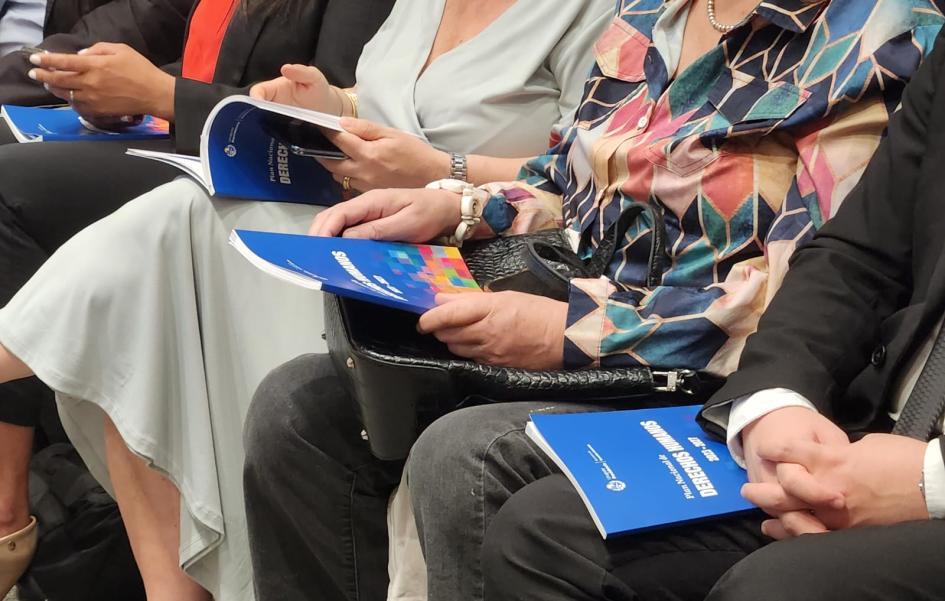
The launch took place on December 18th at the Auditorium of Torre Ejecutiva, with speeches by Vice President Beatriz Argimón, the Resident Coordinator of the UN in Uruguay Pablo Ruiz Hiebra, Human Rights Professor and Master of Law Mariana Blengio, Director General of the Presidency Hebert Paguas, and Human Rights Secretary Sandra Etcheverry, who provided information about the development and projections of this important document. The Plan was presented within the framework of the 75th Anniversary of the Universal Declaration of Human Rights and fulfilled Uruguay's commitment made in 1993 during the World Conference on Human Rights held in Vienna.This document serves as a 'master plan,' and within its framework, the Human Rights Secretariat commits to working collaboratively with government institutions, civil society, and all levels of government, aiming to build a future where dignity, freedom, and justice are guaranteed for all individuals. Among the main Actions of the First National Human Rights Plan are:Formation of the Advisory Council, through which various stakeholders will be called upon to participate in the creation of an advisory council that provides key perspectives for the development and effective implementation of the plan.Promotion of a Bill that establishes, among other issues, the need for a new national plan every 5 years.Civil Society Exchanges, promoting active participation and feedback to enrich the perspective of the NHRP.Development of a Strategic Outlook Document, serving as a fundamental guide, establishing the vision and long-term objectives of the NHRP.Encouragement of participation in dialogue forums contributing to the NHRP agenda construction, ensuring continuous monitoring and informed deliberation on the plan.Establishment of a Network of Focal Points Integrated by Public Bodies to ensure effective coordination and integration of the human rights approach across all governmental areas.Subsequent work will involve the realization of specific public policy commitments, ensuring that each action taken under the NHRP reflects a tangible commitment to human rights.Organization of at least two editions annually of the course currently being offered at ENAP, strengthening the capacities of public personnel. Additionally, efforts will be made to develop new courses and workshops.Continued development of communication materials on the NHRP and human rights to reach the entire population.(Source: Presidency) Video of the ceremony:
1 of 5
Story
28 February 2023
Dialogues on the Future of Uruguay: 2023 Launch
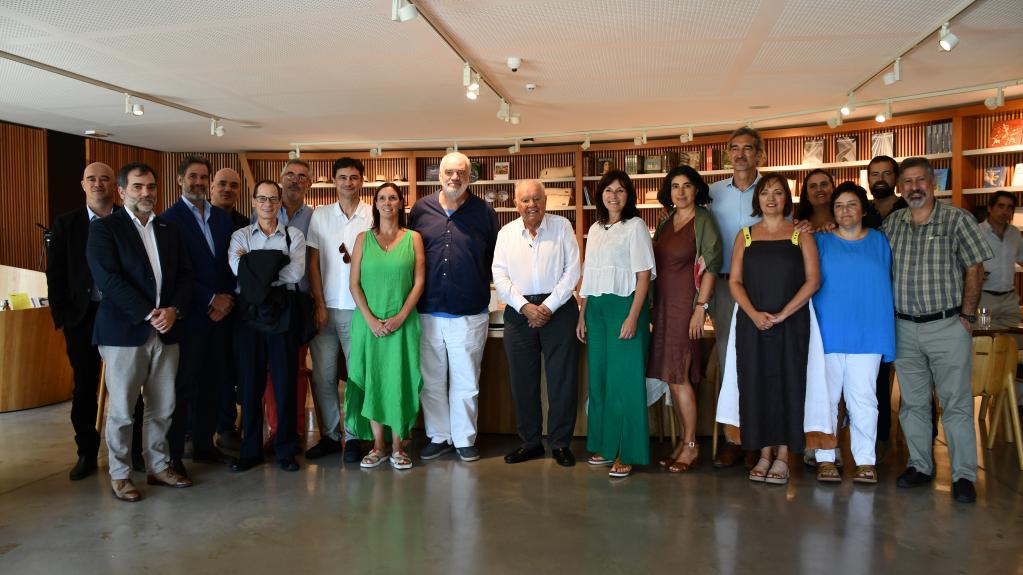
On February 10th, a significant meeting took place between the UN Country Team in Uruguay and the Advisory Council on the Future, where assessments, evaluations, and perspectives related to the series of dialogues on the country's future towards sustainable development were exchanged.The venue holds special significance: it is the headquarters of sculptor Pablo Atchugarry, a member of the Advisory Council on the Future formed for this initiative. In addition to Atchugarry, the Committee includes the President of the Astur Foundation, Mr. Enrique Iglesias, scientist Martina Crispo, and journalist Carolina García. On this occasion, the heads of the United Nations in Uruguay held a meeting with the Council to assess the initial phase of the activity and to outline the events for the entirety of 2023. Participants unanimously recognized the significance of these dialogues, which will contribute inputs aiding Uruguay's constructive process towards development.What kind of country do we want to have in the coming years? What are the topics our society should reflect on to progress towards sustainable development? What challenges must Uruguay face to make the leap towards development?These and other questions served as the starting point for the "Dialogues on the Future of Uruguay." The initiative proposes conducting a series of conversations over two years to identify the challenges Uruguay must overcome to advance towards sustainable development, defined as a process that entails greater economic and social well-being for its inhabitants, in harmony with the environment.The aim is for each of these dialogues to translate into concrete outputs that outline ideas and proposals to address the topics discussed, including climate crisis, violence and security, mental health, and the transformation of education. In 2022, the first two dialogues took place: in September, we inaugurated with the Climate Crisis dialogue, and in November, we held the dialogue on social and solidarity economy.For 2023, dialogues are planned on the following topics: Parity Democracy (March), Water (April), Sustainable Production (May), Mental Health (June), Science, Technology, and Innovation (August), Work, Productive Transformation, and Productivity (September), and Sustainable Cities (October).
1 of 5
Press Release
25 November 2023
Public Statement by the United Nations System in Uruguay: International Day for the Elimination of Violence against Women
Uruguay, November 24, 2023. On the occasion of November 25, the International Day for the Elimination of Violence against Women, the United Nations system in Uruguay reaffirms its commitment to combating gender-based violence and expresses concern over the high rates of violence against women in Uruguay.According to the Second Survey on Gender-Based Violence and Generations, 77% of women over the age of 15 report having experienced gender-based violence in some form and at some point in their lives. Official figures show that in Uruguay, there have been 117 reports of domestic violence per day so far in 2023, equating to one report every 12 minutes. In the first 10 months of 2023, there were 13 attempted femicides and 19 femicides, the most extreme form of this violence. According to the latest data from ECLAC, Uruguay had one of the highest femicide rates in the region in 2022: 1.6 per 100,000 inhabitants.The magnitude of the problem demands urgent efforts from all of society, both in the public and private spheres, to put an end to this form of violence. In this regard, it is crucial to deepen national efforts to implement Law No. 19,580, especially in prevention actions, as recommended by the Committee on the Elimination of Discrimination against Women (CEDAW), and to amplify the voices of victims and survivors of gender-based violence.We reaffirm our commitment to continue collaborating with public institutions and civil society organizations. We trust in the joint efforts of all sectors of society to end violence and discrimination against women. Uruguay's commitment to human rights is the best asset to achieve this.
1 of 5
Press Release
25 September 2023
Reduction of the rotation period of Uruguay's blue helmets
Uruguay received the official communication from the United Nations Department of Peace Operations regarding the acceptance of the proposal from the Ministry of National Defense of the Oriental Republic of Uruguay to reduce the rotation period of personnel serving operational roles in peacekeeping missions from twelve to six months, as a way to promote greater participation of female military personnel. This request arises from the Assessment of Opportunities and Barriers to Women's Participation in Peace Operations (MOWIP), conducted in the Uruguayan Armed Forces in 2020 and published in 2021. The identified barriers support the project "Strategies and Actions for Increasing the Significant Participation of Women from the Uruguayan Armed Forces in Peace Operations," which is funded by the Elsie Initiative and has been implemented in the country since October 2022, under the leadership of the Ministry of Defense and its strategic partners, UN Women and the Uruguayan Agency for International Cooperation (AUCI).
1 of 5
Press Release
27 March 2023
Statement Regarding Fraudulent Emails
Montevideo, Saturday, March 25th. Regarding the circulation of some fraudulent emails inviting individuals, on behalf of the United Nations, to participate in Session 56 of the Commission on Population and Development, scheduled to take place in New York in April of the current year, with instructions for recipients to make wire transfers or payments to secure a hotel reservation, with the promise of subsequent reimbursement for travel and accommodation costs, the United Nations System in Uruguay wishes to inform the following:Firstly, these messages were not sent or forwarded by the United Nations System in Uruguay;Secondly, the United Nations System does not request recipients to make bank transfers or payments in advance when extending invitations to events, with the promise of reimbursement for such transfers later on;These emails do not in any way bind the United Nations System in Uruguay for any actions taken by recipients based on the content of these messages;Finally, the United Nations System in Uruguay recommends that individuals who receive these messages promptly report them to the appropriate authorities.
1 of 5
Press Release
25 November 2022
These were the results of the project to strengthen the socio-economic response to the COVID-19 emergency.
Montevideo, November 23, 2022. To conclude the project "Strengthening the socio-economic response with a generational and gender perspective to the COVID-19 emergency," an event presenting the results was held at the United Nations House in Uruguay. The project, funded by the United Nations Multi-Partner Trust Fund (MPTF), placed special emphasis on creating conditions to strengthen social protection mechanisms with a generational and gender perspective. This involved advancing the comprehensiveness of information systems, supporting the early childhood program "Uruguay Crece Contigo," improving employability and job placement conditions for women in vulnerable situations, reintegrating adolescents into the educational system, and identifying social protection gaps at the territorial level. The following government institutions played active roles in the implementation of this project: the National Institute for Women (INMUJERES), the Ministry of Social Development (MIDES), the National Administration of Public Education (ANEP), the National Institute of Statistics (INE), the Office of Planning and Budget (OPP) along with local governments, and had the coordination of the Uruguayan Agency for International Cooperation (AUCI). Additionally, the following United Nations agencies participated: UNICEF, UNFPA, UNDP, IOM, and UN Women.During the closing event, progress and results of the project implementation were presented, and several authorities from the participating institutions shared their reflections on the project's contribution to their institution's objectives, as well as the lessons learned and challenges for public policies. Additionally, a video summarizing the contents of the different project components was shared.As a result of the project, there is now a georeferencing system for all statistical information, allowing various government entities to more efficiently identify households and individuals with greater socio-economic and health vulnerabilities. It will also advance a metric to identify processes for exiting situations of vulnerability. In this regard, this work complements the design and elaboration of a Multidimensional Poverty Index to be produced by the INE.In order to improve the available information to identify gender gaps and the progress and setbacks experienced after the pandemic, the third National Survey on Time Use and Unpaid Work was conducted and is currently being analyzed to present the results on March 8th.On the other hand, the National Directorate of Transfers and Data Analysis (DINTAD) of MIDES, responsible for identifying beneficiaries of monetary transfers, advanced in implementing a pilot to update the eligibility of those accessing the Social Card Program (TUS) to improve coverage and sufficiency for the vulnerable population.Given that the crisis generated by the pandemic had a significantly greater impact on women from lower social strata and from rural areas, a program on Employability, Care, and Labor Insertion for women in vulnerable situations was designed and implemented, including solutions for caregiving.A program supporting migrant women entrepreneurs and those from the host community in areas with higher migrant influx during the pandemic was also implemented.Finally, the Educational Revolt program was designed and implemented in some María Espínola centers of ANEP to bring adolescents with greater difficulties in sustaining educational continuity closer to the center, a phenomenon exacerbated during the pandemic
1 of 5
Press Release
09 August 2022
Press Release: INDDHH
Montevideo, August 9th.The INDDHH is a significant asset for the country in terms of human rights. Internationally, it is considered a reference institution. For this reason, the selection and appointment process of the INDDHH's Board of Directors for the period 2022-2027 is of great importance. In this regard, national regulations mention requirements such as experience and notable expertise in human rights or high moral authority. These criteria reflect, among others, the Paris Principles, which guide the work of these institutions globally. Among them, it is worth mentioning the importance of safeguarding the formal and functional independence of the institution.The United Nations system trusts that the selection process for the next Board of Directors of the INDDHH will guarantee international standards and expresses its deepest recognition of Uruguay's culture of respect for human rights, which serves as inspiration for many other countries.
1 of 5
Latest Resources
1 / 6
Resources
12 May 2021
1 / 6